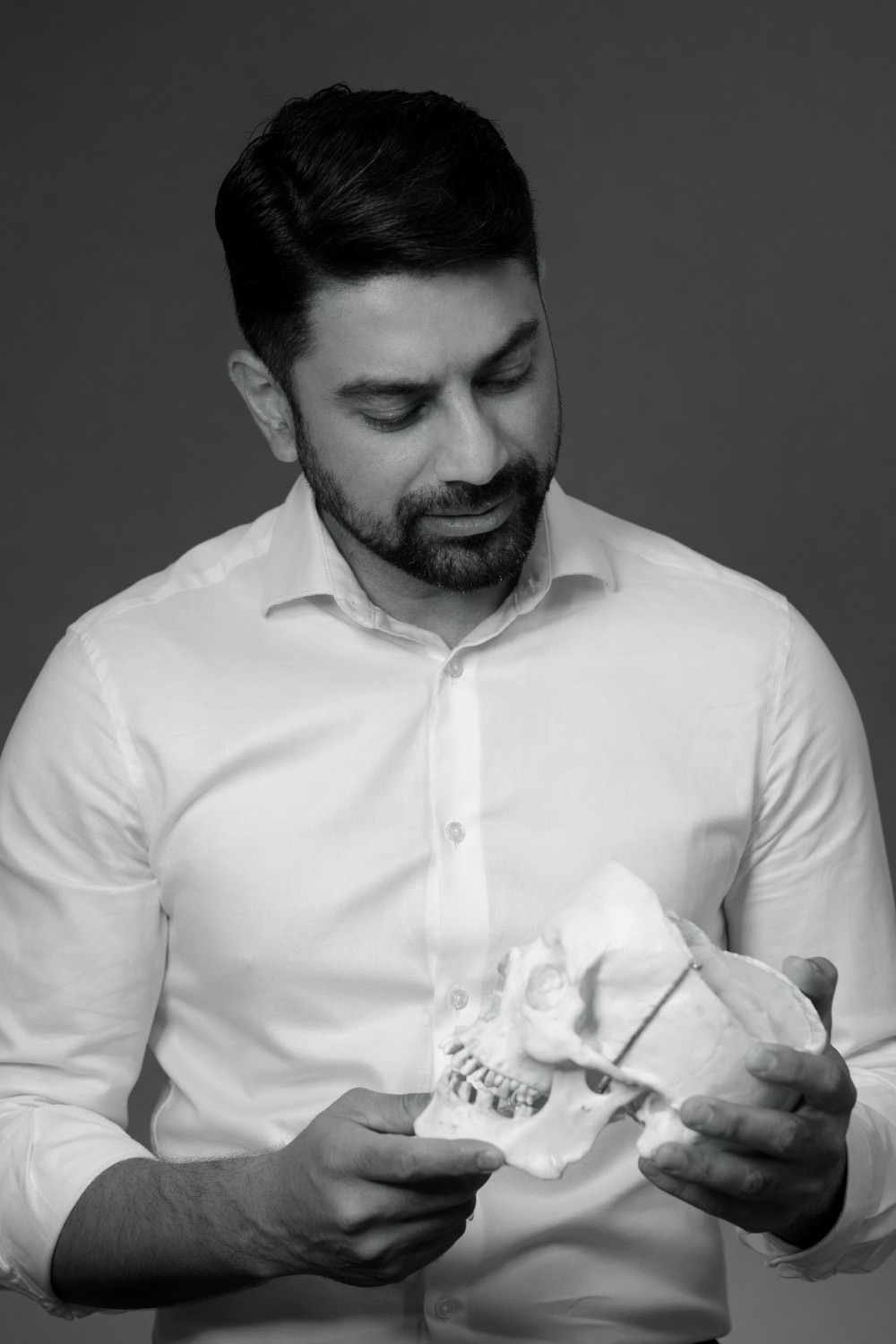
From a single front tooth that must be indistinguishable by design, to complex grafting that rebuilds the foundation itself — every implant is digitally planned and surgically guided.
No hand-offs between offices. Diagnosis, surgery, and restorative direction stay under one roof — and one standard.
Titanium roots supporting crowns and bridges that look, feel, and function like your own teeth — engineered to disappear into your smile.
Where indicated, a failing tooth is removed and the implant placed in the same visit — fewer surgeries, less waiting, preserved bone and gum architecture.
3D-printed surgical guides translate the digital plan to the operating field — implant position accurate to fractions of a millimeter, by design.
Rebuilding lost bone volume so implants have a stable, lasting foundation — from socket preservation to complex ridge reconstruction.
Lifting and grafting the sinus floor to create implant-ready bone in the posterior upper jaw — routine here, even when described elsewhere as impossible.
Restoring the width and height of the jaw ridge — for implant stability and for the natural facial contour that supports it.
“This surgery happened on screen before it happened in the mouth.”
On digital planning
Implant surgery is fundamentally an anatomical discipline: nerve position, sinus anatomy, bone density, soft-tissue architecture. Every case begins with a 3D scan and ends with a restoration designed for your face — not a catalog part.
Guided protocols mean shorter surgeries, calmer visits, and outcomes that match the plan. For anxious patients, IV moderate sedation makes the entire experience quiet and comfortable.
About Sedation